Why Human Habits Are the Biggest Cybersecurity Risk for Modern Businesses
Cybersecurity conversations often focus on ransomware, phishing emails, AI-powered attacks, and sophisticated hackers. While those threats are real, many business security incidents begin somewhere much simpler: everyday human behavior.
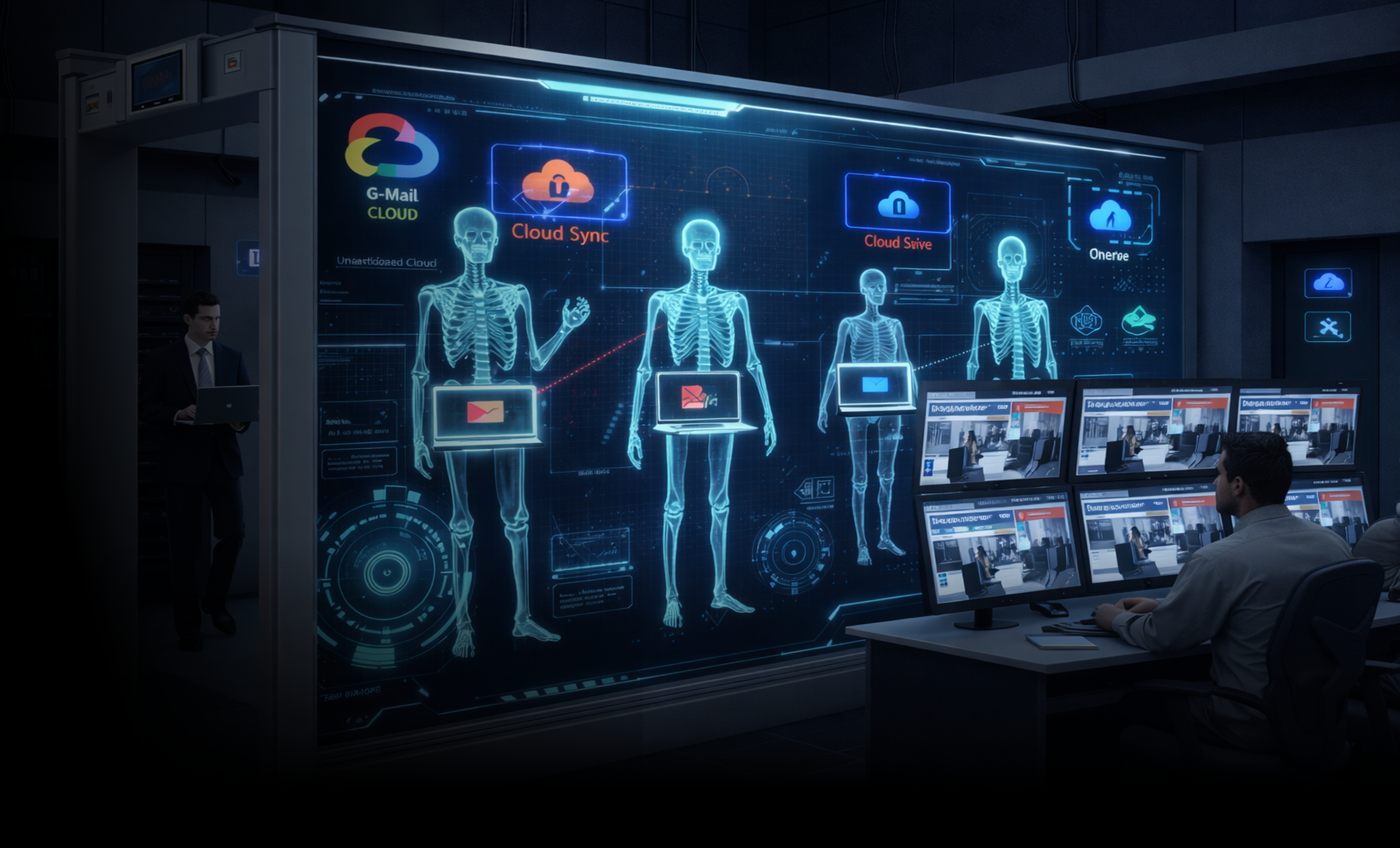
An employee checks personal email on a company laptop. A password gets reused across multiple accounts. A file is uploaded to an unapproved cloud storage app because it feels faster than the approved solution.
These actions may seem harmless in the moment, but they create some of the biggest cybersecurity vulnerabilities businesses face today.
For organizations across Long Island and New York, the modern workplace has blurred the line between personal and professional technology use. Employees work remotely, switch between devices, access cloud platforms from anywhere, and rely on convenience-driven workflows to stay productive.
At AllSector Technology, we help businesses reduce cybersecurity risks by building practical, realistic security strategies that protect organizations without slowing down employees.
In this article, we’ll explore:
- Why human habits create cybersecurity risks
- How personal and work technology overlap increases exposure
- Why restrictive security policies often fail
- Practical ways businesses can reduce human-driven security threats
- How managed IT and cybersecurity solutions help create safer workflows
Human Behavior Is Now a Major Cybersecurity Attack Surface
Most cyberattacks no longer begin with attackers breaking through heavily protected networks.
Instead, attackers target people.
Cybercriminals know employees are busy, distracted, multitasking, and often juggling personal and work responsibilities simultaneously. Rather than attacking security infrastructure directly, attackers exploit routine human behavior.
That’s why phishing attacks, credential theft, social engineering, and account compromise remain some of the most successful attack methods today.
Employees are not the problem. Unprotected workflows are.
The Hidden Risks of Everyday Technology Habits
Most risky cybersecurity behavior doesn’t feel dangerous in the moment.
That’s exactly why these risks are so difficult to manage.
Password Reuse Across Accounts
One of the most common security issues businesses face is password reuse.
Employees often use similar passwords across:
- Personal email accounts
- Streaming services
- Shopping websites
- Social media accounts
- Business applications
If a personal account becomes compromised in a third-party breach, attackers frequently use automated credential stuffing attacks to test those same passwords against business systems.
A single leaked password can quickly become a company-wide security incident.
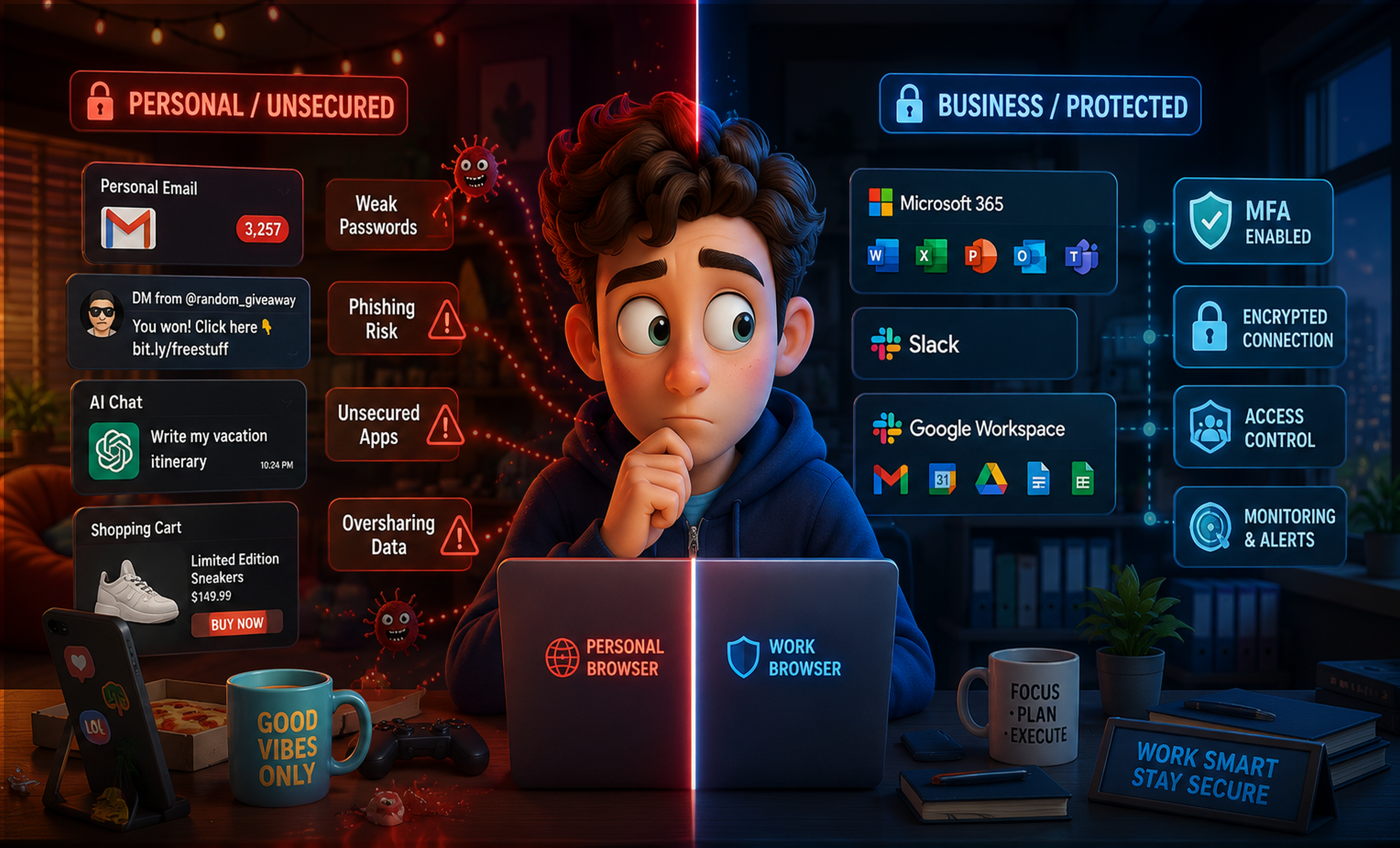
Mixing Personal and Business Activity on the Same Device
Today’s hybrid workforce commonly blends work and personal activity throughout the day.
Employees may:
- Check personal email on company laptops
- Save passwords in personal browser profiles
- Use personal cloud storage apps
- Download personal software
- Access business systems from unmanaged devices
When personal and business identities overlap, attackers gain more opportunities to move between environments.
A phishing link clicked in a personal email account can quickly expose business credentials if both environments share the same browser session or device.
Shadow IT and Unauthorized Apps
Employees often use unauthorized applications simply because they are convenient.
This may include:
- File sharing platforms
- AI tools
- Messaging apps
- Personal cloud storage
- Collaboration platforms
This behavior is usually not malicious. Employees simply want to work efficiently.
The problem is that once company data moves into tools outside IT oversight, businesses lose visibility, control, auditing, and security protections.
Shadow IT has become one of the fastest-growing cybersecurity concerns for modern businesses.
Why Restrictive Security Policies Often Fail
Many businesses respond to security risks by trying to lock everything down.
They block websites, restrict applications, limit browser access, or create complicated login requirements.
Unfortunately, overly restrictive security policies often create new problems.
Employees frequently:
- Look for workarounds
- Use personal devices
- Move work outside approved systems
- Avoid reporting issues
- Circumvent security controls to stay productive
This reduces visibility for IT teams and pushes risky behavior into unmanaged environments.
The goal of cybersecurity should not be to eliminate all human behavior. It should be to create guardrails that reduce risk while supporting productivity.
The Most Effective Cybersecurity Strategies Focus on Realistic Behavior
The strongest cybersecurity environments are designed around how people actually work.
At AllSector Technology, we help businesses implement practical cybersecurity strategies that balance security, usability, and operational efficiency.
Separate Work and Personal Digital Environments
One of the simplest ways to reduce exposure is to separate personal and professional activity.
Businesses should consider:
- Managed browser profiles
- Dedicated work accounts
- Company-managed devices
- Role-based access policies
- Device trust verification
- Secure identity management
Creating separation between personal and business environments helps contain risk if one environment becomes compromised.
Use Phishing-Resistant Multi-Factor Authentication
Traditional passwords alone are no longer enough.
Even if passwords are stolen, phishing-resistant MFA solutions help stop attackers from accessing business accounts.
Modern MFA strategies may include:
- Authentication apps
- Hardware security keys
- Conditional access policies
- Passwordless authentication
- Risk-based login controls
At AllSector Technology, we help businesses implement stronger identity protection strategies designed for today’s evolving threat landscape.
Make Secure Behavior Easier
Employees are far more likely to follow security best practices when secure workflows are simple and convenient.
Businesses should:
- Provide approved file-sharing tools
- Streamline secure access
- Reduce unnecessary login friction
- Offer password management solutions
- Simplify reporting suspicious activity
- Provide ongoing employee education
When security becomes easier than unsafe behavior, organizations naturally reduce risk.
Security Awareness Training Matters More Than Ever
Technology alone cannot fully protect businesses from human-driven cyber threats.
Employees need practical cybersecurity awareness training that reflects real-world scenarios.
Training should cover:
- Phishing identification
- Password security
- Safe browsing practices
- Social engineering awareness
- Shadow IT risks
- AI-related security threats
- Safe remote work habits
Ongoing education helps employees become an active layer of defense instead of an accidental vulnerability.
Why Long Island Businesses Need a Modern Cybersecurity Strategy
Small and midsize businesses are increasingly targeted because attackers know many organizations lack dedicated internal security resources.
Modern cybersecurity requires more than antivirus software and basic firewalls.
Businesses across Long Island need:
- Managed cybersecurity monitoring
- Endpoint protection
- Identity and access management
- Cloud security
- Employee security training
- Dark web monitoring
- Incident response planning
- Proactive risk management
At AllSector Technology, we help businesses build layered cybersecurity strategies designed to protect against both technical and human-driven risks.
Cybersecurity Is About Building Better Habits
Employees are not the weakest link in cybersecurity.
Outdated security strategies are.
Businesses that succeed in today’s threat landscape are the ones that create secure, realistic workflows that support employees instead of fighting against them.
The goal is not perfection. The goal is resilience.
By reducing unnecessary exposure, separating personal and professional environments, strengthening authentication, and providing practical guidance, businesses can dramatically lower cybersecurity risk without sacrificing productivity.
Concerned about cybersecurity risks created by everyday employee habits?
AllSector Technology helps Long Island businesses strengthen cybersecurity with managed IT services, employee security awareness training, endpoint protection, cloud security, and proactive risk management solutions.
Contact our team today to schedule a cybersecurity assessment and identify hidden risks within your organization’s digital environment.
Website: https://allsector.com
Phone: 866-783-6648
Email: info@allsector.com