
Session Cookie Hijacking: Why MFA Alone Isn’t Enough to Protect Your Business
Multi-factor authentication (MFA) is often considered the gold standard of cybersecurity.
And it is—up to a point.
But here’s what many businesses don’t realize:
👉 MFA protects the login… not what happens after.
As outlined in the original concept , once a user is authenticated, their session becomes the new target—and attackers are increasingly exploiting that gap.
The Hidden Weakness in Modern Authentication
When you log into a cloud application, your browser creates a session—often stored as a cookie.
Think of it like a digital wristband:
- You’ve already been verified
- You don’t need to show ID again
- You can move freely within the system
But what if someone steals that wristband?
They don’t need your password.
They don’t need your MFA code.
👉 They just reuse your authenticated session.
This is known as session cookie hijacking—and it’s one of the fastest-growing threats in modern cybersecurity.
Why MFA Isn’t the Finish Line
MFA is still critical—but it’s not a complete defense.
Attackers have shifted tactics:
- Instead of breaking in… they go around the login
- Instead of stealing passwords… they steal sessions
- Instead of triggering alerts… they blend in as legitimate users
This means:
👉 Your strongest security control can be bypassed without ever being “broken.”
What Is a Session Cookie—and Why It Matters
A session cookie is what keeps you logged in after authentication.
It allows:
- Seamless access across apps
- Fewer login prompts
- Better user experience
But it also creates risk.
If an attacker gains access to that session token:
- They can impersonate the user
- Access sensitive systems
- Operate without detection
In simple terms:
👉 A stolen session is as powerful as stolen credentials—sometimes more.
How Session Cookie Hijacking Actually Happens
This isn’t theoretical—it’s happening right now through several sophisticated attack methods.
1. Adversary-in-the-Middle (AiTM) Phishing
This is one of the most dangerous modern attack techniques.
Here’s how it works:
- The attacker creates a fake login page
- The victim enters credentials and completes MFA
- The attacker captures the session cookie in real time
The user logs in successfully… unaware anything is wrong.
Meanwhile, the attacker now has:
👉 A fully authenticated session—ready to reuse.
2. Browser-in-the-Middle Attacks
In this scenario, attackers effectively hijack the browsing session itself.
They don’t just steal credentials—they:
- Monitor activity
- Capture session tokens
- Replay access without reauthentication
It’s like someone sitting invisibly beside you, using your access.
3. Endpoint-Based Cookie Theft
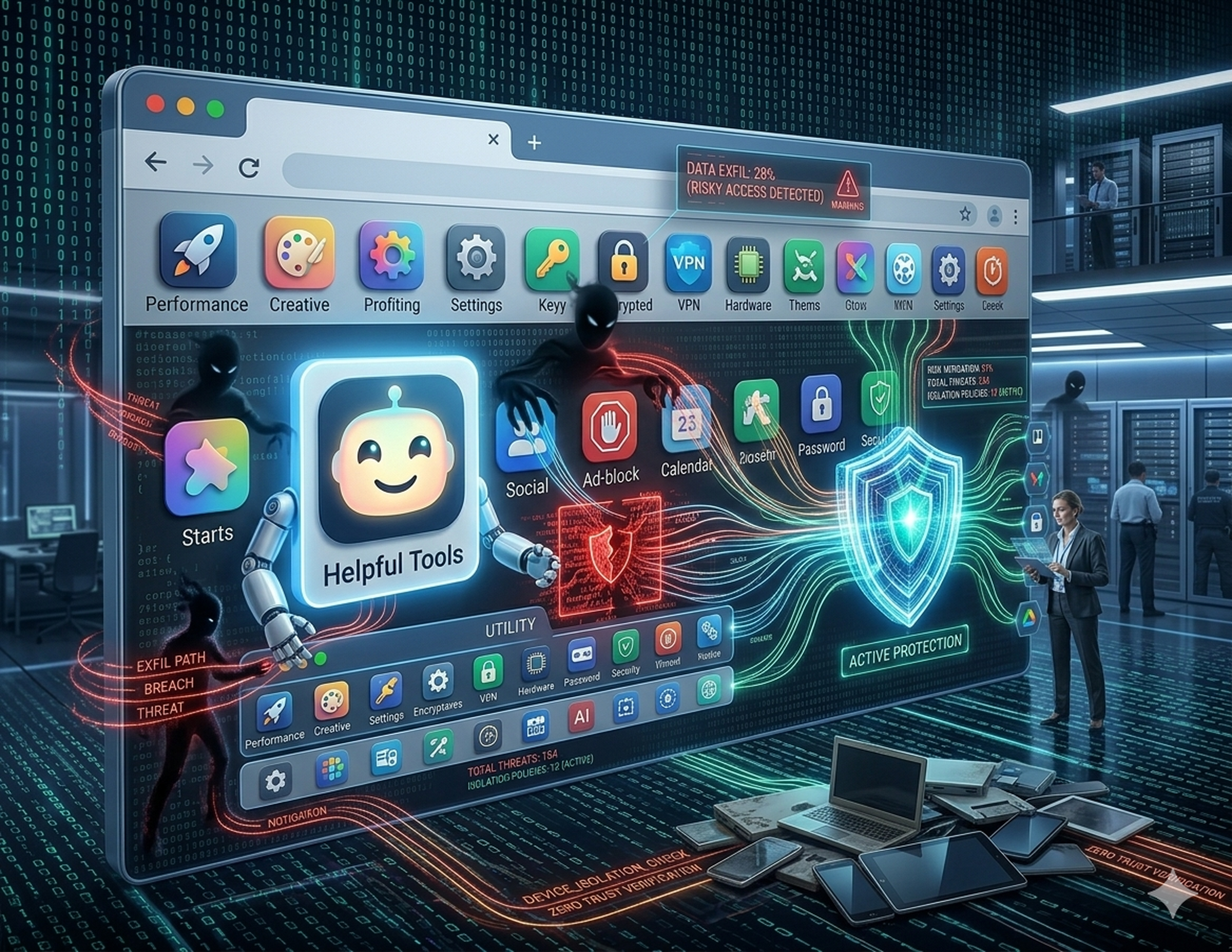
Sometimes the weakest link is the device itself.
If a device is compromised:
- Malware can extract session tokens
- Cookies can be copied and reused
- Attackers gain persistent access
This turns endpoints into security gateways for attackers.
Why This Threat Is So Dangerous
Session hijacking is uniquely effective because it:
- Bypasses MFA entirely
- Avoids triggering login alerts
- Mimics legitimate user behavior
- Operates silently in the background
This makes detection significantly harder.
👉 Many businesses don’t realize they’ve been compromised until damage is already done.
The Solution: A Layered Security Approach
At AllSector Technology, we emphasize one principle:
👉 Security is not a single tool—it’s a system.
To defend against session hijacking, you need layered protection:
1. Phishing-Resistant Authentication
- Move beyond basic MFA (SMS, push notifications)
- Implement hardware keys or passwordless authentication
- Reduce reliance on easily intercepted methods
2. Device Trust and Endpoint Security
- Ensure only trusted, compliant devices can access systems
- Monitor device health and patch levels
- Block access from unknown or compromised endpoints
3. Session Management Controls
- Enforce session timeouts
- Require reauthentication for sensitive actions
- Limit session reuse across devices and locations
4. Behavioral Monitoring and Detection
- Identify unusual login patterns
- Detect impossible travel scenarios
- Monitor abnormal system behavior
5. Incident Response Readiness
- Quickly revoke sessions
- Force logouts across systems
- Contain threats before they spread
Rethinking Identity Security in 2026
The biggest shift in cybersecurity today is this:
👉 Identity doesn’t stop at login.
It includes:
- Device trust
- Session behavior
- User activity patterns
Businesses that rely solely on MFA are operating with a false sense of security.
How AllSector Technology Helps Protect Your Business
We help organizations move beyond basic security with:
- Advanced identity and access management
- Endpoint detection and response (EDR)
- Phishing-resistant authentication solutions
- Continuous monitoring and threat detection
Our goal is simple:
👉 Close the gaps attackers are already exploiting.
Final Thoughts: Don’t Let MFA Be Your Only Line of Defense
MFA is essential—but it’s just the beginning.
Attackers are evolving. Your security strategy needs to evolve with them.
Because today’s threats don’t always break the lock…
👉 They walk right past it.
Worried your business may be vulnerable to session hijacking?
Contact AllSector Technology today for a Security Assessment and strengthen your identity protection strategy.